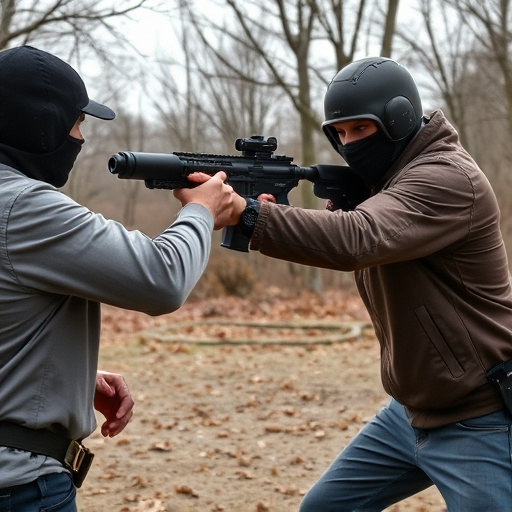
Stun gun technology has evolved beyond traditional firearms, employing high-voltage electrical currents (muscle interference) to temporarily incapacitate individuals at varying ranges. With increasing voltage, stun guns deliver more powerful shocks over longer distances, making them valuable tools for law enforcement and personal defense. These devices induce intense pain, spasms, and temporary paralysis, aiding in control or escape scenarios without causing permanent harm. Advanced features include accurate projectile design, optimized electrode systems, adaptable modes, and safety measures to ensure effective and safe use.
“Stun weapons, with their potent electrical impulses designed to disrupt muscle control, have evolved beyond traditional stun guns to include projectile devices. This article delves into the fascinating technology behind these non-lethal weapons, exploring key components and the science of muscle interference. We analyze the factors influencing the range of projectile stun weapons, compare them to conventional models, and present real-world applications.
Additionally, we address legal considerations and safety precautions, including global regulations, training requirements, and ethical debates surrounding their use, particularly in self-defense versus excessive force scenarios.”
- Understanding Stun Weapon Technology
- – What are stun weapons and how do they work?
- – Key components of a stun gun or projectile device.
Understanding Stun Weapon Technology
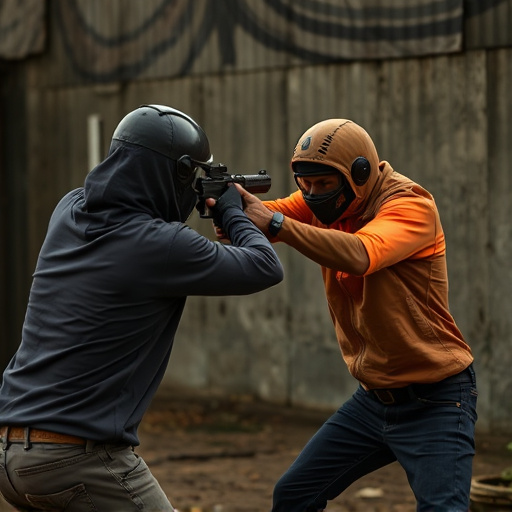
Stun weapon technology has evolved significantly, offering a range of options beyond traditional stun guns. These advanced devices utilize high-voltage electrical current to disrupt an individual’s muscle control and coordination. The key metric in assessing their effectiveness is the projectile range—the distance at which they can deliver a powerful enough shock to incapacitate a target.
Stun weapons operate on the principle of muscle interference, sending intense bursts of electricity through the body. The voltage levels vary across models, with higher voltages typically extending the range and increasing the likelihood of successful disruption. This technology is particularly useful in law enforcement and self-defense scenarios where non-lethal force is required to control or subdue an individual without causing permanent harm.
– What are stun weapons and how do they work?
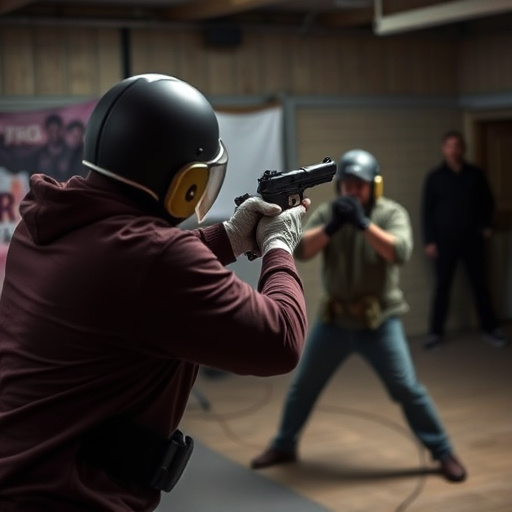
Stun weapons, often referred to as stun guns or electroshock weapons, are non-lethal devices designed to temporarily incapacitate a target through electrical impulses. They operate by delivering a high-voltage, low-amperage electrical charge to the body, disrupting the muscle’s ability to contract normally. This results in a powerful stun effect that causes the target to lose balance and consciousness for a brief period, allowing the user to gain control or escape.
The stun gun operates on the principle of voltage muscle interference, where a strong electric field is generated, interfering with the electrical signals transmitted by nerves to muscles. This interference leads to involuntary contractions and relaxation of muscles, causing the target to experience intense pain, spasms, and temporary paralysis. The impact can range from a simple shock to complete incapacitation for several minutes, making stun weapons popular among law enforcement, security personnel, and individuals seeking personal protection.
– Key components of a stun gun or projectile device.
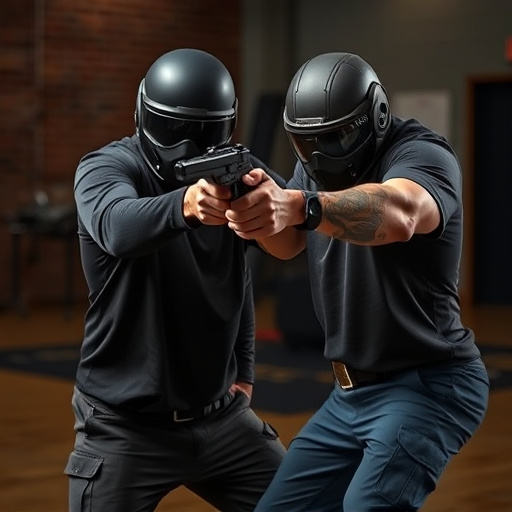
Stun guns and other projectile devices designed for non-lethal force rely on several key components to achieve their effect. At the heart of these tools is the electrical system, which generates a high voltage pulse that disrupts the muscle control in a target. This electrical interference is what causes the individual to experience a powerful stun, temporarily incapacitating them. The projectile itself is typically designed for accuracy and range, often utilizing advanced technologies such as compressed air or spring-loading to propel the device at high speeds.
The voltage output is a critical factor—higher voltage generally results in a more intense stun but also requires greater power sources. The design of the electrodes or tips that make contact with the target plays a significant role in how effectively the current flows through the body. Advanced models may incorporate safety features and various modes for different situations, ensuring users can respond appropriately to diverse challenges while minimizing harm.
Stun weapon technology, particularly in terms of projectile devices, has evolved significantly, offering diverse range capabilities and effective muscle interference through high stun gun voltage. Understanding these tools’ key components is crucial for both users and regulators alike to ensure safe and strategic deployment in various scenarios. As this technology continues to advance, staying informed about its capabilities and limitations is essential for navigating the challenges and opportunities it presents.