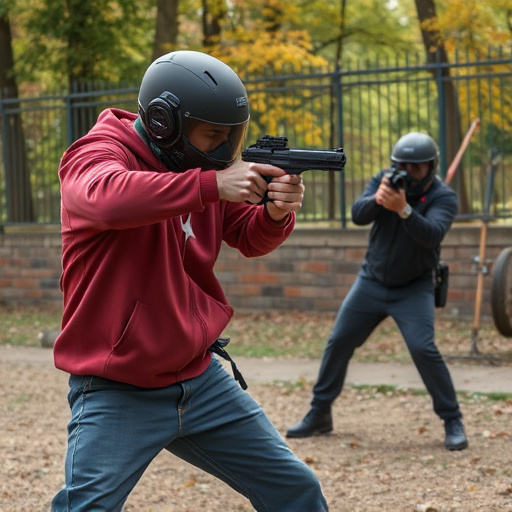
Stun guns utilize high-voltage electric currents (50,000-150,000) to temporarily disrupt muscle control via nerve fiber depolarization, causing brief paralysis lasting from seconds to a minute. Higher voltage levels result in longer immobilization periods crucial for officer safety and subject control without causing significant harm. Effective deployment requires understanding voltage impact on muscle interference, proper training, and adherence to best practices including specific muscular area targeting and safe distance maintenance.
“In today’s world, understanding the effects of stun gun voltage and its impact on muscle interference during deployment is crucial. This article delves into the duration of paralysis caused by Taser technology, separating fact from fiction. We explore how stun gun voltage influences the time and intensity of incapacitation, offering insights into best practices for safe use. By understanding muscle interference, users can minimize risks associated with Taser deployment.”
- Stun Gun Voltage: Understanding the Impact
- Muscle Interference: How It Occurs During Deployment
- Duration of Paralysis: Fact vs. Fiction
- Taser Effects: Time and Strength Considerations
- Minimizing Risk: Best Practices for Safe Use
Stun Gun Voltage: Understanding the Impact

Stun guns, or Tasers, operate by firing electrical charges that disrupt muscle control in the body, leading to temporary paralysis. The voltage delivered by these devices plays a crucial role in determining the duration and intensity of this paralysis. Typically, stun gun voltages range from 50,000 to 150,000 volts, though lower settings are available for less lethal applications. The higher the voltage, the more powerful the muscle interference, resulting in longer periods of immobilization. This effect is critical as it ensures the safety of both the officer and the subject by neutralizing a potentially dangerous individual long enough to control and secure them without causing significant harm.
Understanding the relationship between stun gun voltage and paralysis duration is essential for law enforcement professionals. Operators must consider the specific circumstances, such as the subject’s physical condition and resistance, to ensure appropriate voltage levels are used. Inaccurate judgment could lead to prolonged immobilization, increasing the risk of discomfort or complications for the target individual. Therefore, training and proficiency in Taser deployment techniques, including an awareness of electrical muscle interference dynamics, remain paramount in modern policing strategies.
Muscle Interference: How It Occurs During Deployment
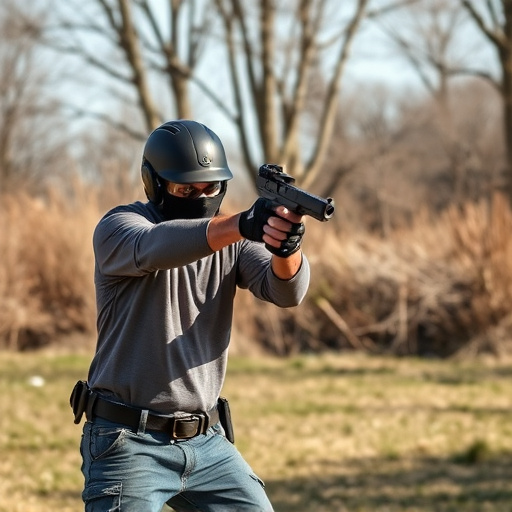
When a stun gun, or taser, is deployed, it sends a powerful electric current through the body, aiming to disable and stun the target. This shock interrupts muscle contractions by depolarizing nerve fibers, effectively freezing the muscles. The interference with muscle function occurs due to the high voltage delivered by the device.
The impact of this muscle interference is immediate, causing the targeted muscles to stop contracting suddenly. This abrupt cessation can lead to temporary paralysis, making movement extremely difficult or impossible for a short period. The duration of this paralysis depends on various factors, including the stun gun’s voltage and the specific muscles affected.
Duration of Paralysis: Fact vs. Fiction
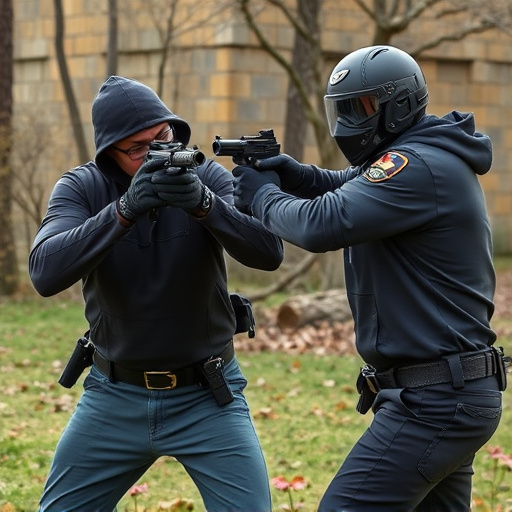
Many people imagine that being stunned by a taser leaves you paralyzed for an extended, sometimes indefinite, period. This notion is both a misconception and a product of dramatic portrayals in media. The reality is much more nuanced. Paralysis induced by stun gun deployment typically lasts for a few seconds to a minute, depending on various factors.
The short duration results from the taser’s high-voltage electric current disrupting muscle fibers but not completely destroying nerve signals. This interference affects the body’s ability to coordinate movement, leading to temporary paralysis. Once the current stops flowing, nerve function is restored, and mobility returns almost immediately. Thus, while a stun gun can effectively disable an individual for a brief period, it does not cause prolonged or permanent paralysis.
Taser Effects: Time and Strength Considerations
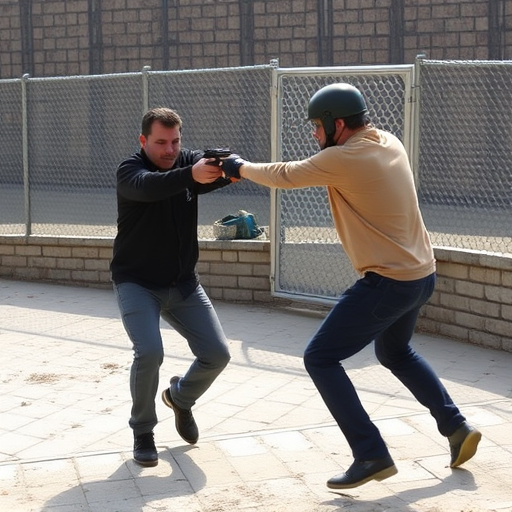
The effects of a taser, or stun gun, are primarily aimed at temporarily incapacitating a target through electrical impulses that disrupt muscle control. The duration and intensity of this disruption depend on several factors, including the voltage output and the specific muscle groups affected. Higher voltage levels can lead to longer durations of paralysis, as they cause more significant interference in nerve signals, resulting in prolonged muscle weakness.
The strength of the taser’s electrical current is a crucial consideration. While stun guns are designed to safely subdue individuals, excessive voltage or improper application could potentially cause unnecessary harm or prolong the duration of paralysis. Understanding these variables is essential for law enforcement and security professionals to ensure they employ tasers effectively and responsibly, balancing safety with the need to quickly neutralize threats.
Minimizing Risk: Best Practices for Safe Use

To minimize risk and ensure safe use, best practices should be followed when deploying a stun gun. The primary goal is to achieve muscle interference at a voltage that incapacitates the target without causing severe injury. This requires understanding the device’s specifications, including its stun gun voltage and energy output. Users must be trained to deliver controlled shocks, focusing on key muscular areas like the legs or arms, rather than vital organs or the head.
Additionally, maintaining proper distance is crucial. The recommended range for most stun guns is around 2-3 meters (6-10 feet), allowing for accurate targeting while keeping the user at a safe distance from potential counterattacks. Regular maintenance and inspection of the device are also essential to ensure optimal performance and safety. This includes checking battery health, cleaning the contact points, and replacing any worn-out parts.
The deployment of tasers, though designed to incapacitate, can lead to temporary paralysis through muscle interference caused by high stun gun voltage. Understanding the duration of this paralysis is key in ensuring safe and effective use. This article has debunked myths surrounding the topic, highlighting that stun gun voltage and its effects on the body depend on various factors. By recognizing the potential for muscle interference and adhering to best practices, users can minimize risks associated with taser deployment.